Dumpster Rental vs Junk Removal: Which One Saves You Money
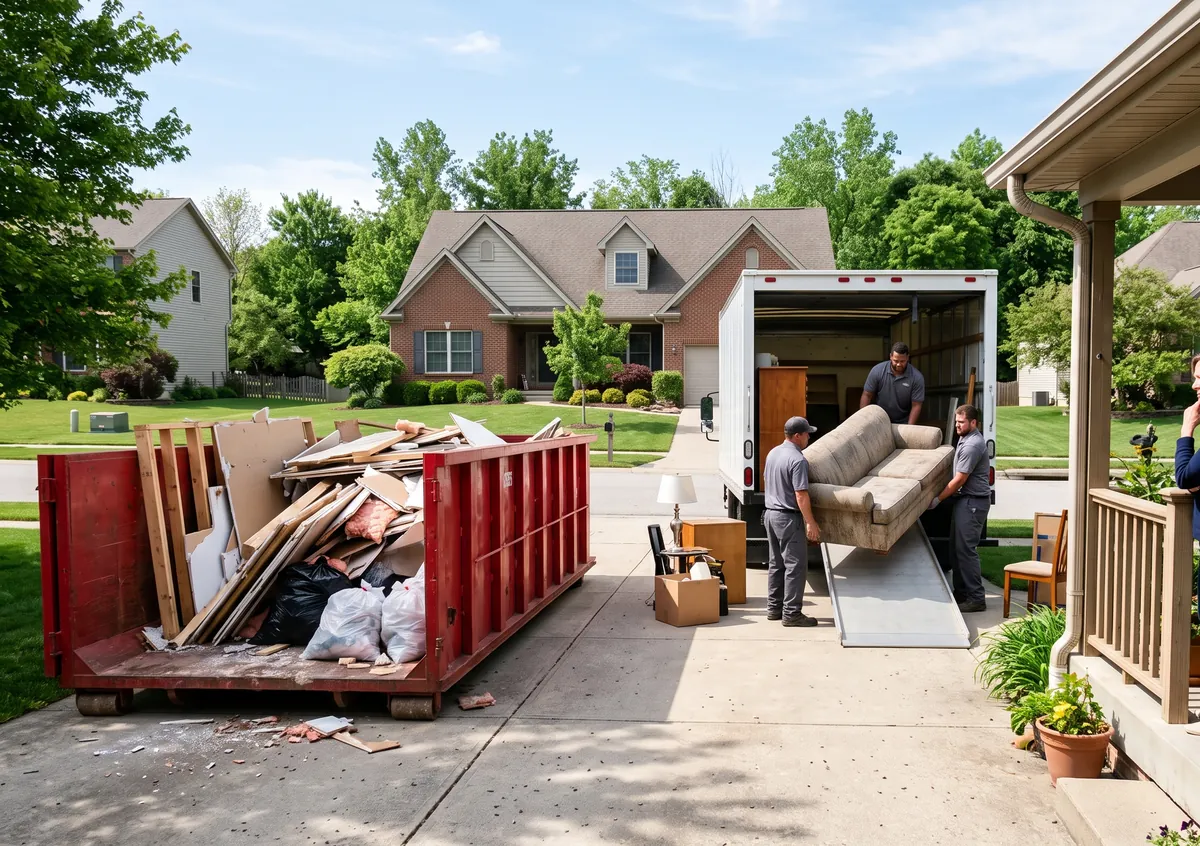
Dumpster rental vs junk removal: rent a roll-off dumpster when you have a long project and you are willing to load it yourself over days or weeks. Hire junk removal when it is a one-time pile, you want it gone today, and you do not feel like touching it. Dumpsters usually win on price per cubic yard for big slow jobs. Junk removal wins on speed, labor, and convenience for everything else.
I run a junk removal crew, so you might expect me to talk you out of the dumpster. I won't. Half the time the dumpster is the right call, and I would rather you spend your money smart than hire me for a job that did not need a full crew.
The core difference
It comes down to who does the loading and how long you have the container.
- Junk removal: I show up, my crew loads everything, and we drive away the same day. You lift nothing. You pay for labor, the truck, and the dump fee, all bundled.
- Dumpster rental: a company drops an empty roll-off in your driveway, leaves it for a set number of days, and comes back to haul it off. You do every bit of the loading yourself, on your own schedule.
That single distinction, who loads it, drives almost every other decision below.
Side by side
| Factor | Junk removal | Roll-off dumpster |
|---|---|---|
| Who loads it | The crew | You |
| Timeline | Same day, a few hours | Days to weeks |
| Typical cost | $150 to $600 per pickup | $300 to $600 per rental period |
| Best for | One-time pile, heavy items, no labor | Long projects, steady debris |
| Labor on you | None | All of it |
| Driveway space | None needed | Needs a parking spot |
| Permit | Never | Sometimes, if on the street |
| Weight limit | Built into the quote | Hard cap, overage fees apply |
| Sorting and donation | Hauler can divert items | You handle any diversion |
Prices swing by region because, as always, the local dump fee drives the number. I get into why that gate fee controls everything in junk removal cost in 2026.
When the dumpster wins
Rent the roll-off when the project has these shapes:
- A renovation or remodel that throws off debris for two weeks. You fill the dumpster as you go instead of paying a crew to come back five times.
- A roof tear-off, deck demo, or flooring rip-out where the material comes out gradually and you have the muscle to load it.
- A big decluttering you are doing slowly, a garage and basement over a long weekend, where you want a container sitting there to throw things into whenever you have an hour.
- Cost per yard matters more than your time. If you have free labor (yourself, family, a couple of buddies) and the project is large, the dumpster is almost always the cheaper path per cubic yard.
The dumpster rewards patience and your own sweat. If you have both, it is the value play.
When junk removal wins
Call a crew like mine when:
- It is a one-time pile and you never want to think about it again. Estate cleanout, a single room, a deceased relative's furniture.
- The items are heavy, awkward, or up stairs. A piano, a hot tub, an old cast-iron tub, appliances down three flights. You do not want to be the one lifting that, and you might hurt yourself trying.
- You need it gone today. No waiting for a drop-off and pickup window. We load and leave.
- You cannot or do not want to load anything yourself. Age, injury, schedule, or you just value your weekend.
- You want stuff diverted. A good hauler pulls out metal for scrap and usable furniture for donation, which you would otherwise have to arrange yourself.
Junk removal is labor and speed in a box. You pay more per cubic yard than a dumpster, but you pay zero in your own time and back.
Can you do both?
Sometimes the smart move is a mix, and I tell people this even when it means I get the smaller half. On a big project, rent a dumpster for the bulk of the slow self-loaded debris, then call a hauler for the one or two things you cannot or should not handle: the hot tub, the piano, the cast-iron tub, the fridge with refrigerant that needs special disposal. You get the dumpster's cost-per-yard on the easy stuff and the crew's muscle on the few items that would hurt you or that the dumpster company will not accept anyway. Many dumpster rentals prohibit appliances, tires, and hazardous items, partly because a lot of that material is supposed to be recycled or handled separately rather than landfilled, which the EPA's recycling guidance lays out. Those items were never going in the box to begin with. Splitting the job this way often costs less overall than forcing everything down one path.
The hidden costs nobody mentions
A few things sink people's budgets, and they are almost always on the dumpster side.
Permits and driveway placement
If the dumpster sits in your own driveway, you usually need no permit. The moment it sits on a public street, many cities require a permit that can run $25 to $100 or more, and an unpermitted dumpster on the street can get ticketed. Always ask the rental company and your city before it lands.
Also measure your driveway. A roll-off is big and heavy, and the delivery truck can crack a soft asphalt driveway or one with a steep approach. Lay down plywood under the wheels if you are worried. A few sheets of plywood or a stack of furniture moving blankets under the container's contact points protect the surface.
Weight limits and overage fees
This is the big one. A dumpster rental includes a weight allowance, often a ton or two. Go over it and you pay a per-ton overage, sometimes $50 to $100 per extra ton, on top of the base price. People load a 20-yard dumpster with concrete or dirt, fill a quarter of it, and get a surprise overage bill because dense material blows past the weight cap fast.
If your debris is dense (concrete, tile, dirt, shingles), the dumpster's volume is a trap. You will hit the weight limit long before you fill the space. For heavy dense loads, get the weight allowance in writing and consider a smaller dumpster rated for heavy material.
Loading is real work
People forget that "you load it" means you load it. Saving $150 over a junk removal crew is a fine trade until you are three hours into hauling broken drywall in July and your lower back gives out. If you go the dumpster route, get the right gear. A solid hand truck or dolly and a good pair of work gloves are the difference between a manageable weekend and an injury.
Dumpster sizes, and picking the right one
If you land on the dumpster, size is the next trap. Roll-offs are sold by cubic yard, and people consistently rent too big or too small.
- 10-yard dumpster: about three pickup-truck loads. Good for a single-room cleanout, a small bathroom remodel, or a heavy material like concrete where you will hit the weight cap long before you fill the box.
- 20-yard dumpster: the most common rental for homeowners. Handles a flooring tear-out, a medium remodel, a big garage-and-basement purge. This is the one I see in most driveways.
- 30-yard dumpster: large home cleanout, major renovation, new construction debris. More space than most household jobs need.
- 40-yard dumpster: commercial and large construction. Overkill for almost any homeowner.
The mistake I see most is renting a 30 or 40 for a job that fits in a 20, then paying for air. Rent the size that fits the volume, and if the material is dense and heavy, go a size smaller than your gut says because weight, not space, will be your limit.
A simple decision framework
Ask yourself three questions:
- How long will I be generating debris? One day means junk removal. Two weeks means dumpster.
- Am I willing and able to load it myself? No means junk removal. Yes means the dumpster is on the table.
- Is the material heavy and dense? If yes, lean toward junk removal or a small heavy-rated dumpster, and watch the weight cap either way.
If you answer "one day, no, doesn't matter," call a hauler. If you answer "two weeks, yes, and I have help," rent the dumpster. Most jobs fall cleanly on one side once you run those three.
Frequently Asked Questions
Is a dumpster cheaper than junk removal?
For long, self-loaded projects, yes, a dumpster usually wins on cost per cubic yard because you supply the labor. Junk removal looks more expensive on paper, but that price includes a full crew loading everything and the dump fee, so for a one-time pile it can actually be the better value once you count your own time and back. The break point is whether you are willing to load it yourself over days.
Do I need a permit to put a dumpster in my driveway?
No permit is needed if the dumpster sits entirely on your own private driveway. You typically only need a permit when it sits on a public street, where many cities charge $25 to $100 or more and will ticket an unpermitted one. Always confirm with the rental company and your city before delivery.
What happens if I go over a dumpster's weight limit?
You pay a per-ton overage on top of the base rental price, often $50 to $100 per extra ton. Dense material like concrete, dirt, tile, and shingles blows past the weight cap long before it fills the space, so heavy loads are where people get surprise bills. Get the weight allowance in writing and rent a smaller box rated for heavy material if your debris is dense.
What size dumpster do I need for a house cleanout?
A 20-yard dumpster is the most common choice for homeowner cleanouts and medium remodels, and it is the one I see in most driveways. A 10-yard fits a single-room cleanout or heavy dense material where weight is the limit, while 30 and 40-yard boxes are for major renovations and commercial jobs. Most household jobs that people rent a 30 for actually fit in a 20.
Can a dumpster delivery damage my driveway?
Yes, the roll-off and the delivery truck are heavy and can crack soft asphalt or a steep approach. Lay down plywood under the container's contact points and the truck's wheels to spread the load. This is cheap insurance against an expensive repair.
Will a junk removal crew take items a dumpster company refuses?
Often yes. Appliances with refrigerant, tires, and certain heavy or hazardous items that most dumpster rentals prohibit can usually be handled by a hauler who knows the right disposal route. That is exactly why splitting a big job between a dumpster for bulk debris and a crew for the few problem items frequently costs less overall.
The honest call
Neither option is a ripoff. They solve different problems. The dumpster is the right tool for long, self-loaded projects where cost per cubic yard rules and you have the time and muscle. Junk removal is the right tool for one-time piles, heavy awkward items, and anyone who wants the job done today without lifting a finger. Match the tool to the job and you will not overpay either way. And if reading all this made you think the hauling side looks like a decent living, I wrote up the real numbers in how to start a junk removal business.